
Context
CMC Markets is a UK-based financial services company offers online trading in shares, spread betting, contracts for difference (CFD) and foreign exchange (FX) across world markets.
CMC Markets wanted to improve stickiness on its platform after seeing a decrease in overall session durations in 2021.
Problem
Retail traders do not have a way to analyse their historical trades on the CMC platform to show them what is working well for them, and where they can improve.
Role
I was Senior Product Designer conducting research, design, delivery and assessment.
The cross-functional team included product managers, developers, compliance and QA specialists. It was important that any design should pass strict financial regulations and be technically feasible.
Key takeaways
The project was challenging from a UI perspective as after initial customer testing, we found that we were limited to essentially using the existing UI from the rest of the platform. There was resistance from both customers and incumbent dev teams. Effective communication and collaboration with cross-functional teams proved critical.
It also reinforced the importance of user-centric design and not assuming that something would test better just because it was more “modern looking”.
On mobile It was challenging to cater for a hybrid bespoke / native design. Devs wanted native so all of the components were designed with Android and iOS in mind.
Result
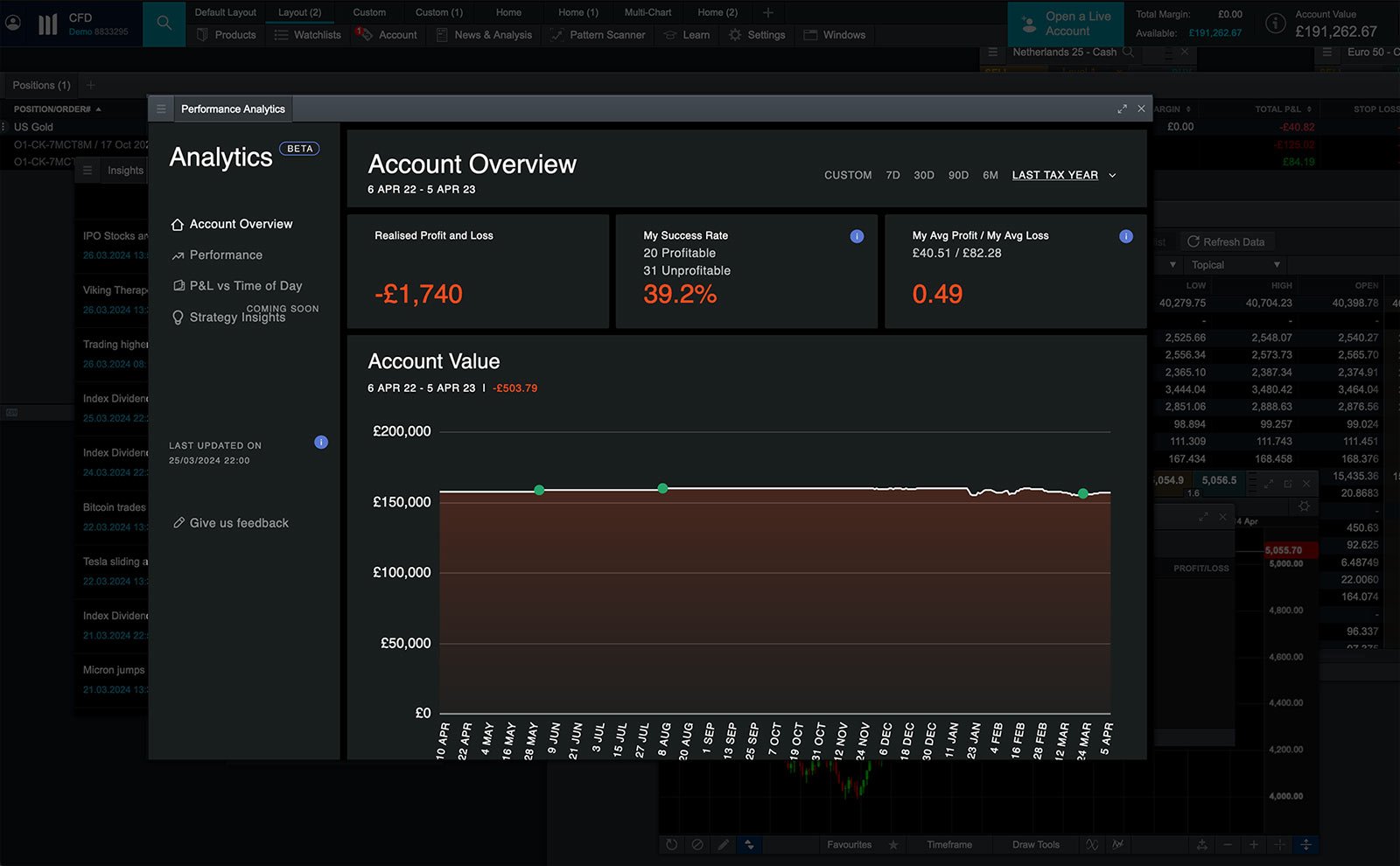
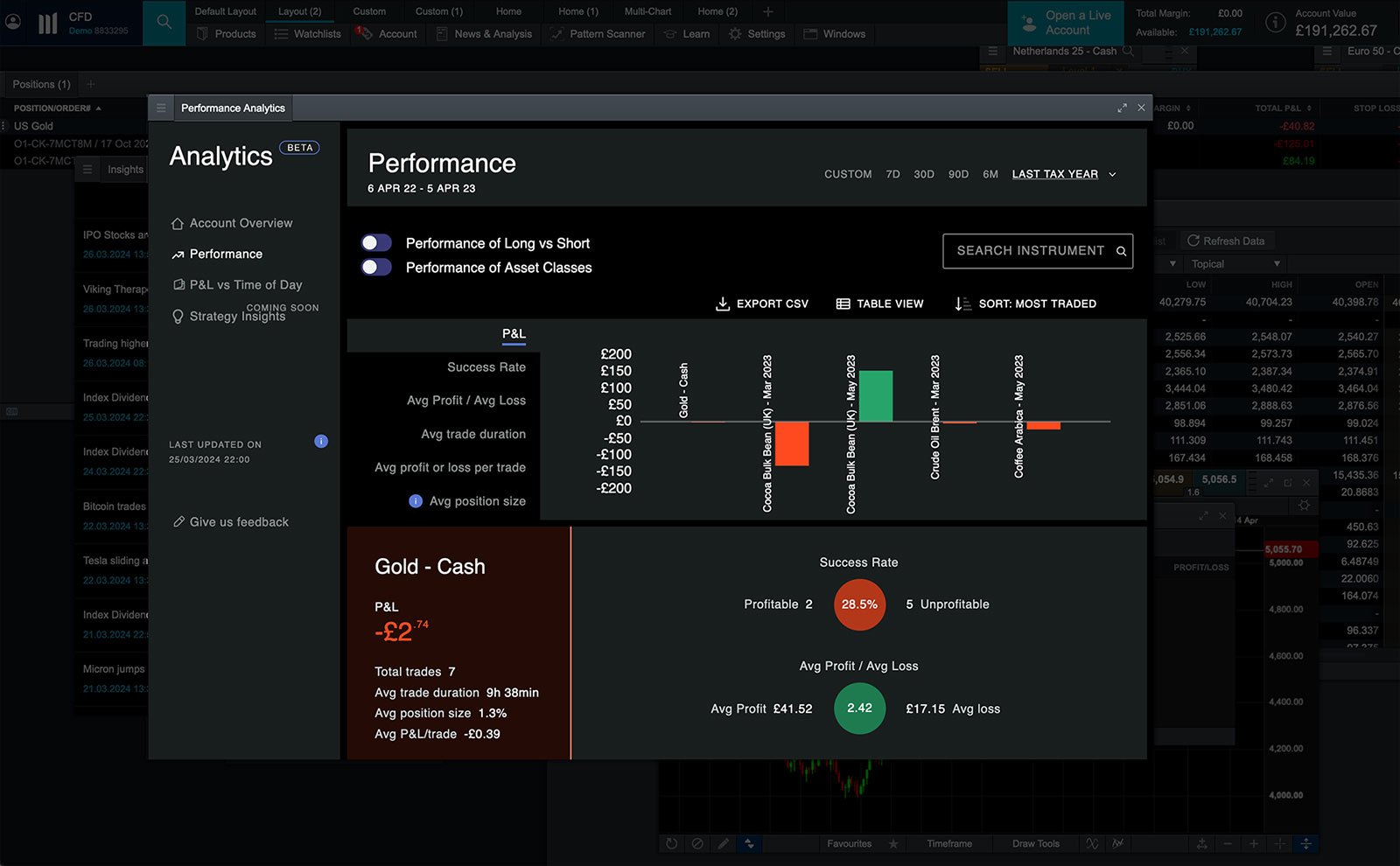
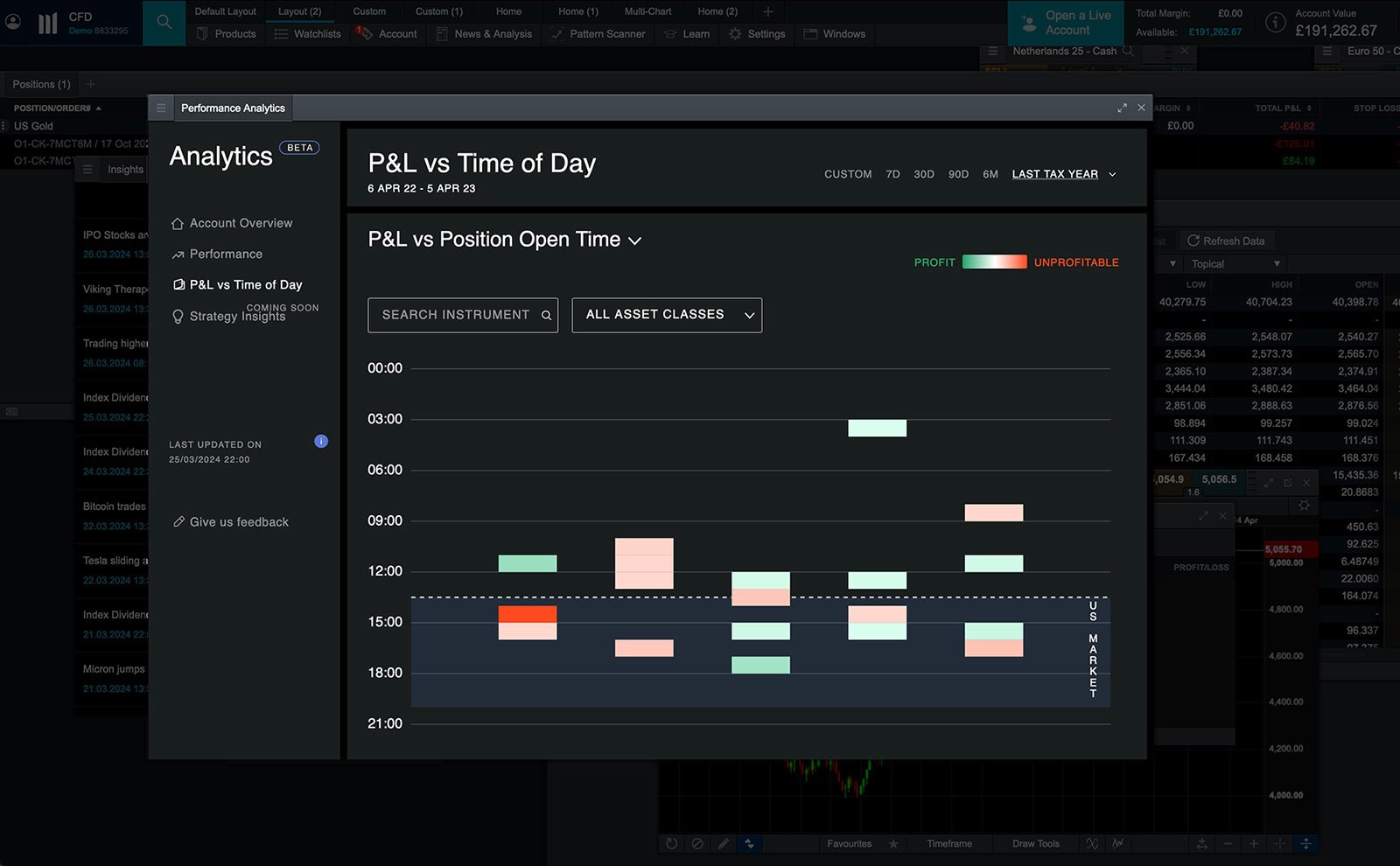
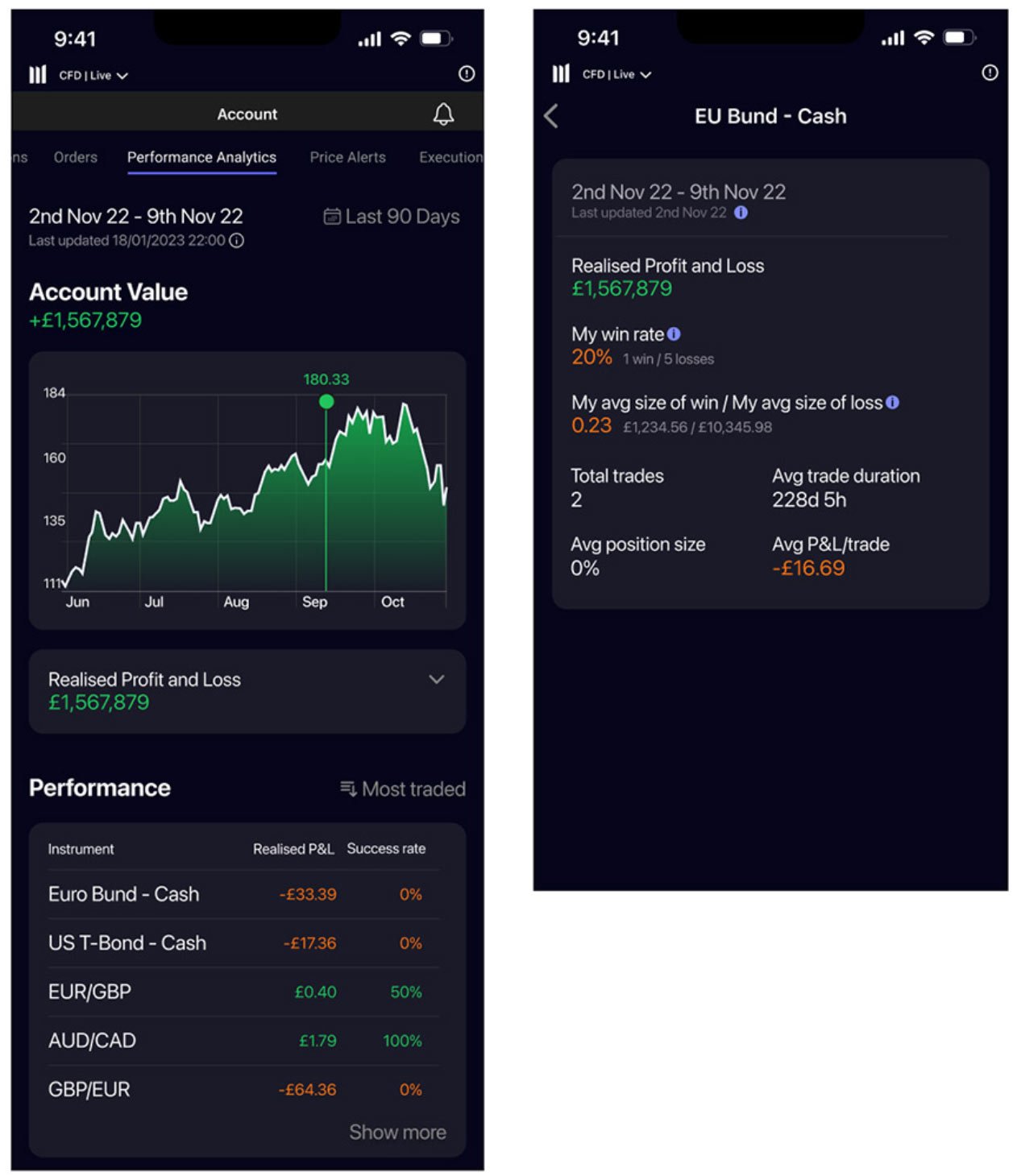
After extensive customer “beta” testing with a selection of customers both the desktop and mobile versions of the dashboard were released mid 2023.
Metrics
Desktop and mobile versions were very well received by testers and feedback gave a net promoter score of over 60.
Follow-up interviews with beta testers were carried out to further explore how the dashboard was being used by the traders.
It was found that there was a very disappointing 12% uptake of the Performance Dashboard by existing customers – which was put down to poor awareness of the feature. This would be addressed by targeted marketing efforts.
Process
Discovery phase
- Information architecture review
- Review of existing customer feedback to client services
- Competitor analysis and features
Information architecture
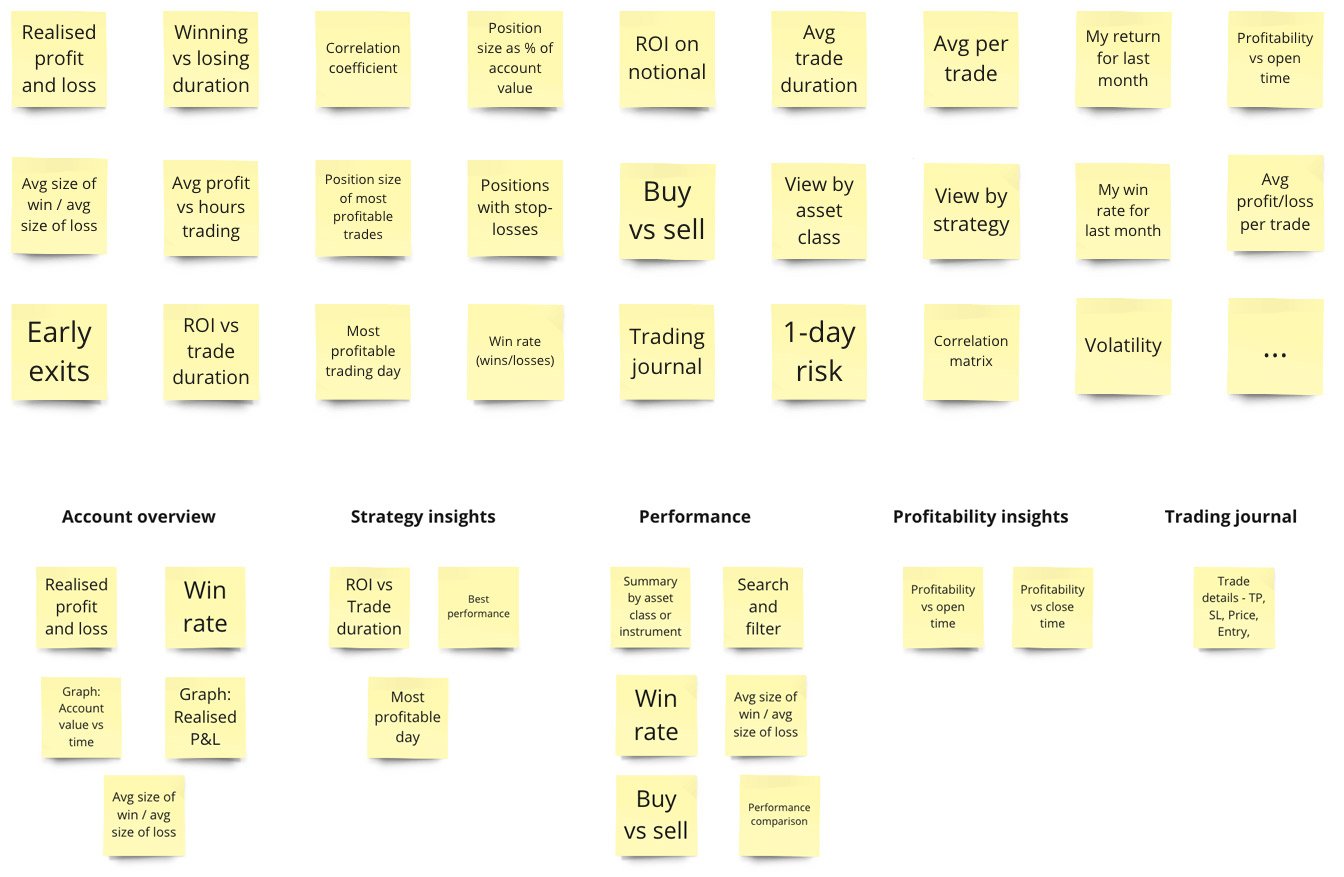
- It was important that mapping of data was initially done with help of experienced Product Manager.
- There was a lot of data initially – but it was decided to start with a small number of items for the first prototype.
- It took two rounds of tree testing to get the first grouping of modules to test
Existing customer feedback
Customers had asked for a form of trade analysis for years – and numbers had steadily increased from 2 to around 6 requests a month since late 2020.
Specific request of custom date range was mentioned regularly so this was an essential feature although historic data prior to 2 years was not available due to technical constraints.
Competitor analysis
A number of competitors already had trading analytics as part of their platform experience.
Some would only activate the trade analytics after successful completion of a set of live trades.
Once an initial navigation structure was confirmed, mid-res wireframe designs and flows were tested with selected customers who had enough trades with CMC so that any performance data was meaningful to them.
The prototype data fields were populated with the traders’ actual data to get a more meaningful interviews.
Prototype progression
Early prototype
- Pros – Lots of metrics and data on trades
- Cons – No information on significance of each metric to the trader. Overwhelming amount of information
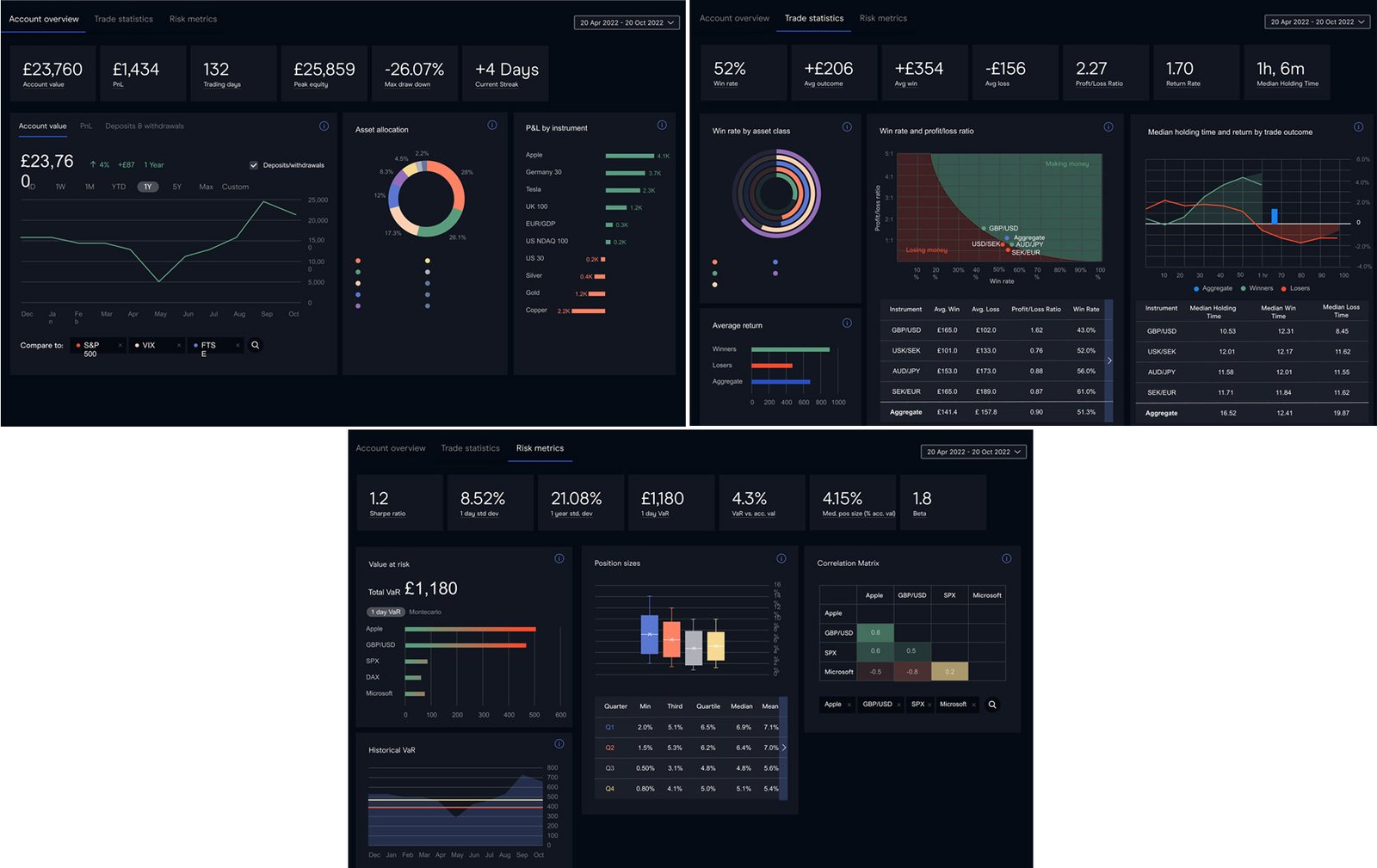
Second phase prototype – this version gave
- Pros – “contextual intelligence” to the insights
- Cons – users felt like the presentation (tone of voice and aesthetic) was out of place within the existing platform

Launch version
- Pros – this version moved towards the visual language and tone of the existing platform which tested far better – less resistance, less confusion and a “no nonsense”, “professional” approach that appealed in customer testing
- Cons – looked dated compared to other platforms but remained suited to existing platfrom

Mobile
The interviews served another purpose – to find out what features would be offered on the mobile app version of the dashboard.
A separate design sprint would determine the feature set and prototyping of the mobile version of the dashboard.
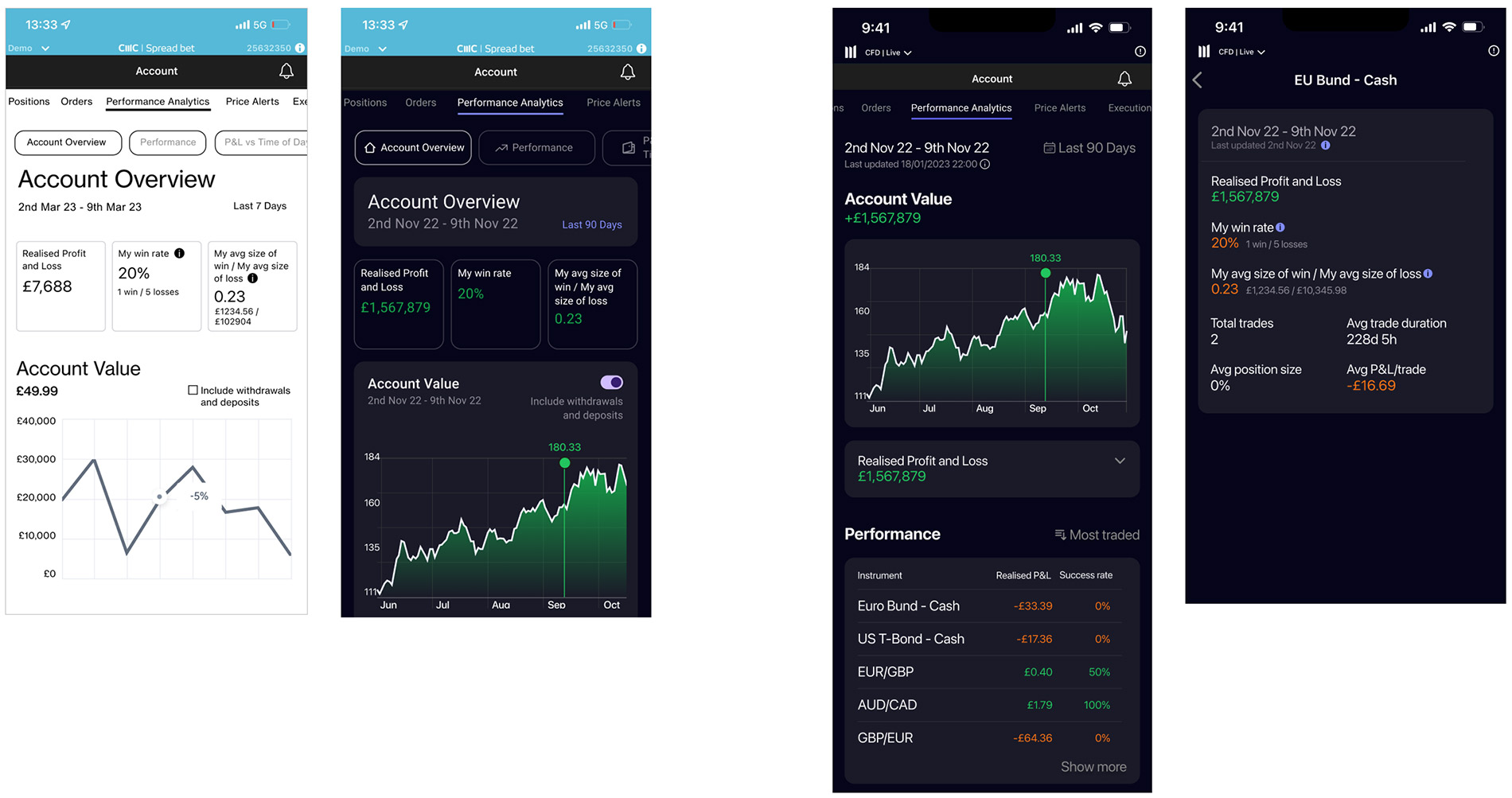
Previous research and statistics showed that customers used mobiles to check on existing open trade positions – so the detailed data and insights did not need to be replicated from desktop to mobile.
The mobile version has a stripped down UI with use of progressive reveal for customers that wished to drill down into further details.
Launch
After extensive customer “beta” testing with a selection of customers both the desktop and mobile versions of the dashboard were released mid 2023. Both versions were very well received and feedback gave a net promoter score of over 60. Follow-up interviews with beta testers were carried out to further explore how the dashboard was being used by the traders.