
The client
A group of experienced payment industry professionals who have previously created successful industry-leading payment platforms and were looking to enter the Crypto wallet arena.
The challenge
eSports and tournament gaming is worth over £100 billion*. Banks increasingly view video gaming transactions as high risk, and many designate in-game card payments as gambling transactions.
There are risks of chargebacks for young players who may overspend, and the risks associated with anti-money laundering (AML) checks for large prize pots. All these factors lead to high costs, card declines, delays and frustration for all concerned.
The challenge is to address the above and provide a solution that benefits the Game Players and Providers needs, is financially rewarding, and technically viable.
*market analysts Newzoo 2018
What was my role?
- Product Designer, UX/UI Design
- Project management with Agile framework
- Software / hardware architecture design
- Brand identity
- Digital Design lead
What was the outcome?
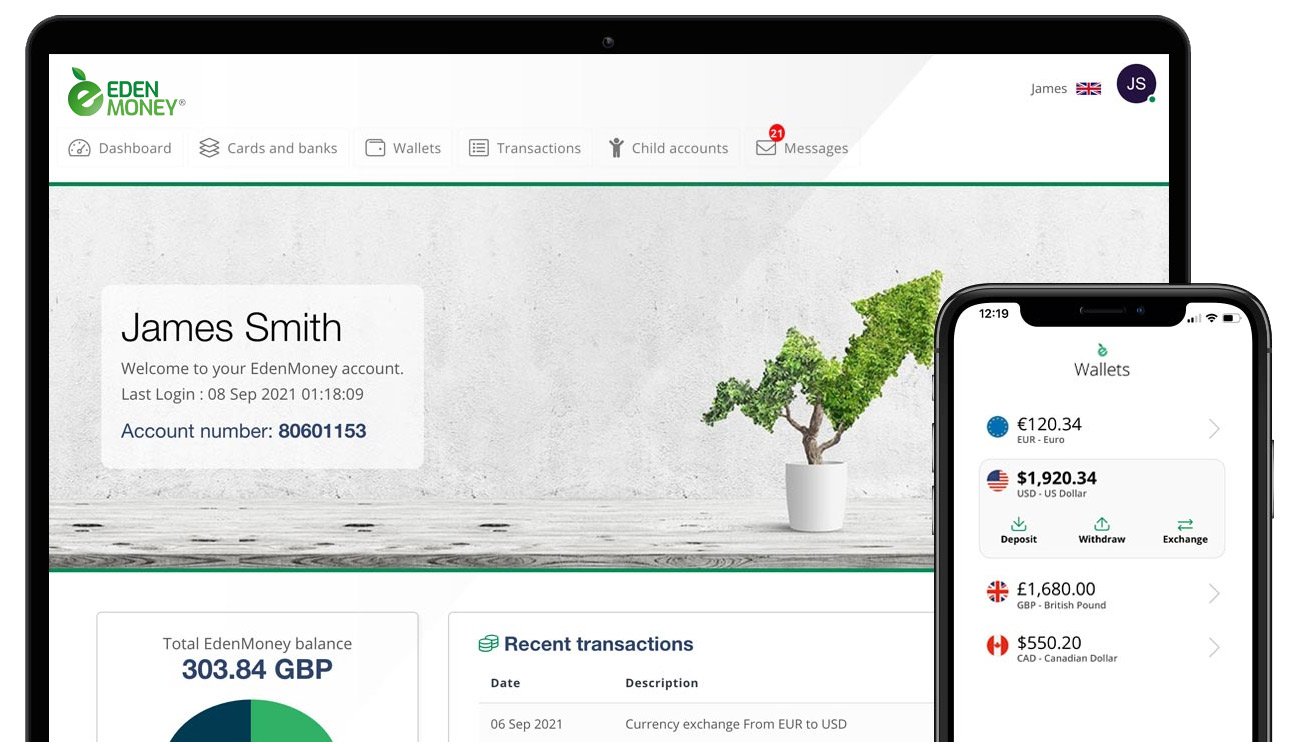
The EdenMoney web and mobile crypto wallet was launched for “Alpha” testing by a select user group, and fulfilled all the initial business requirements.
Thoughts
I enjoyed the huge challenge of this project. It was a very ambitious one which had to address different user groups (Game players, Providers, Business Stakeholders) and their needs.
I learnt many lessons including the necessity of open and honest communication in order to manage everyone’s expectations, and the power of iterative processes in order to improve the design and usability.
The importance of sticking to the user-centric approach in design is crucial to the success of a project.
What was done?
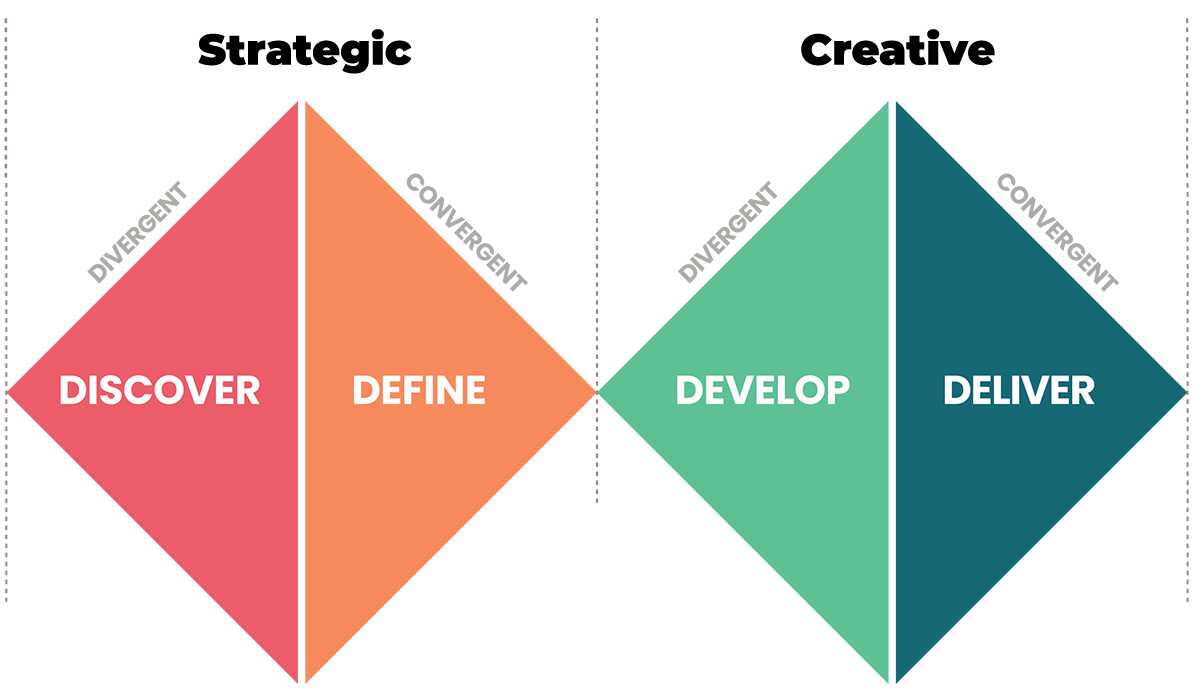
I used the Double Diamond model with divergent / convergent thinking for my approach to this project.
Strategic phase
Discover
User interviews, Insights, Empathy mapping, Competitor analysis
I began by asking what the user and business needs are. Together with the business Stakeholders we established that Users were split into the Game Players and Gaming Providers (esports Teams / Tournament Operators / Video Games Developers / Platform Providers)
User interviews
We conducted interviews with a broad range of Players and Gaming Providers to establish pain points and validate our initial assumptions, and also help with determining the types of personas that might be users of the product.
Insights (Data Analytics)
We researched the current state of play in the gaming world – and the business case for EdenMoney:
- The video-games and eSports market is set to exceed $200 billion by 2023
- In-app purchases are the revenue drivers
- Payment provider resistance previously faced by gambling companies are coming to video gaming so payment is becoming difficult
Empathy mapping / Personas (Players and Gaming Providers)
Based on market insights, I prepared Personas for Players including those under 18 who would be under the umbrella of a Parent account with restrictions (monetary and age rating)
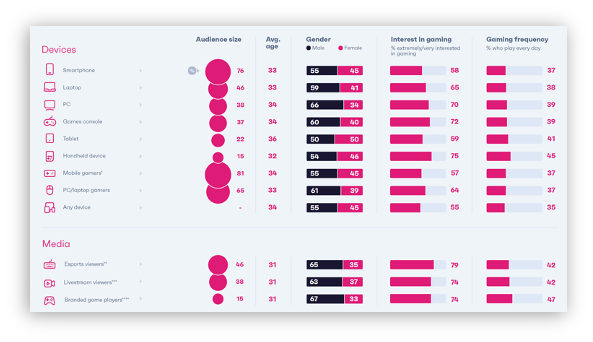
The market is hugely diverse and spans platforms, gender and age-group as reported by GWI.
Competitor analysis
Research of KYC and account processes of a variety of online payment providers and Crypto wallets Neteller, Monzo, Coinbase, Wise, ecoPayz
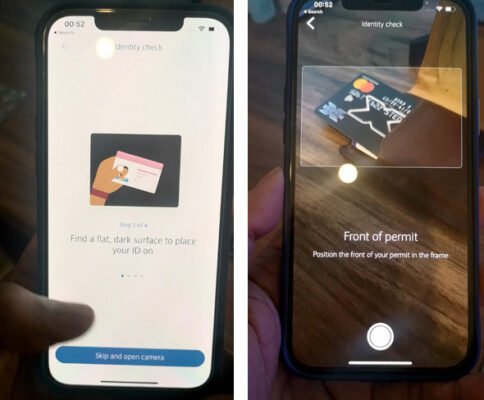
The KYC processes were wide and varied but had a common theme of verifying the user name / date of birth and address, and then a method of document and “selfie” verification which was either “instant” or required the user to wait for confirmation later by the company.
The platform for document / selfie verification varied from web based verification or mobile app-only camera verification.
The value of simple, step by step instructions, hand-holding the customer through the process was obvious and would reduce any ambiguity or confusion and also invalid document uploads.
Define
What was needed?
Through analysis of the data obtained, we established that EdenMoney would have the following requirements:
- A stored value wallet that allows instant payments in any currency – including Fiat (non-Crypto), Bitcoin, Ethereum and proprietary currency, EdenGilt
- Payments that are instant and do not pass through the banking network which would attract extra fees
- Automated KYC (Know Your Customer) facility so that Gaming providers who are signed up to EdenMoney know that any Customers who use EdenMoney are fully verified
- An Escrow facility to hold prize funds for instant payment when appropriate
- “Child” accounts allowing parental control of minors’ spending
Creative phase
Develop
Exploration with stakeholders of different design ideas.
User flows
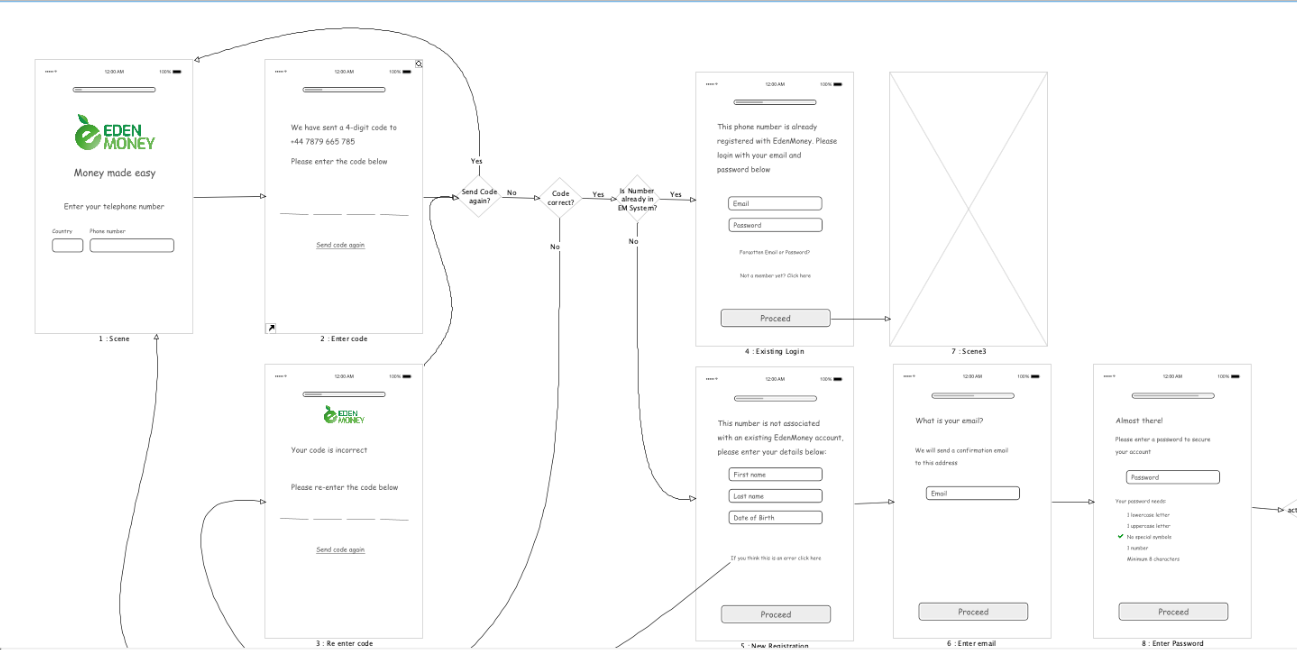
I began by creating some user flows for the priority features. These were then shared with the Stakeholders, refined iteratively and signed off.

Wireframes
Next came lo-fidelity wireframes created in Visual Paradigm.
Business process diagrams
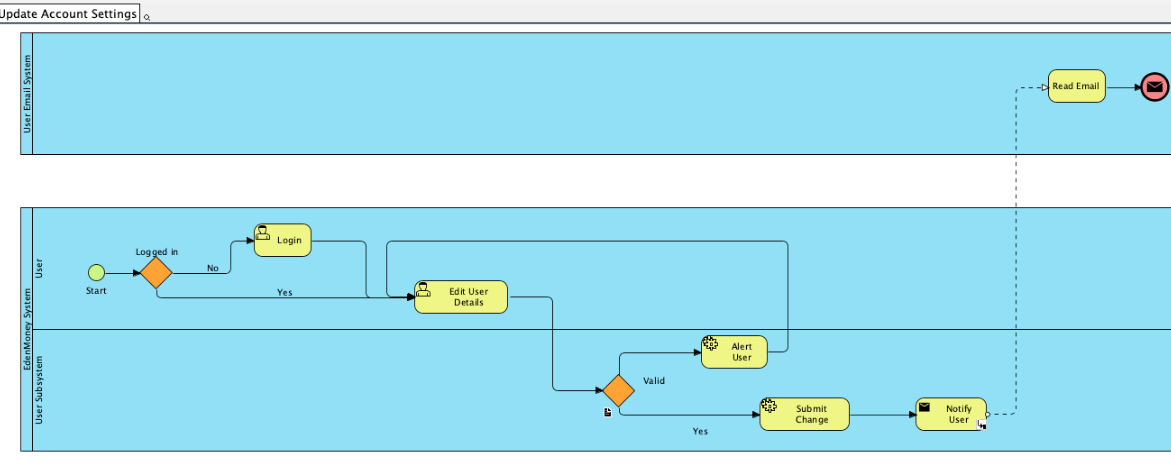
Liaising with Stakeholders, process diagrams were created and refined based on the initial user flows. This was done to make the development by engineers clear and easy-to-understand.
User testing
Low fidelity interactive prototypes were created for user feedback and decisions on which concepts worked best. Usability testing and feedback from users led to some key design changes – for example it was shown that users preferred giving less information in any initial registration form. It was decided that only name, email and date of birth were required to get initial access to the system.
Design reviews
I had regular feedback from the design team, and stakeholders to refine the product iteratively.
At the end of the Develop divergent process, a robust design rationale and concepts were defined ready for refinement in the next stage of design.
Deliver
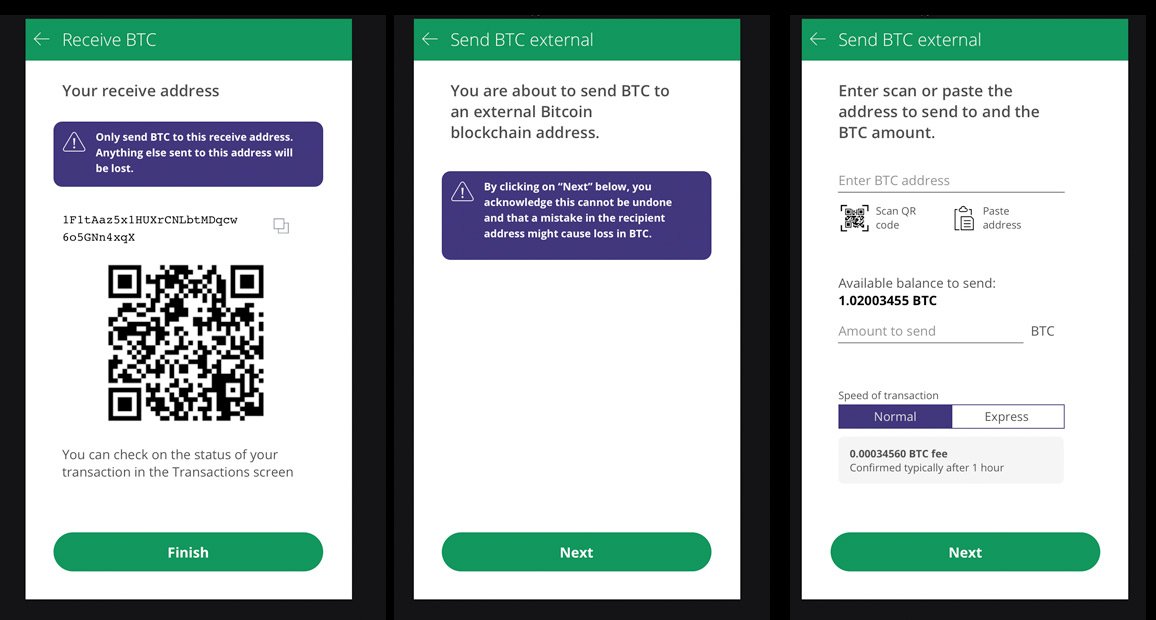
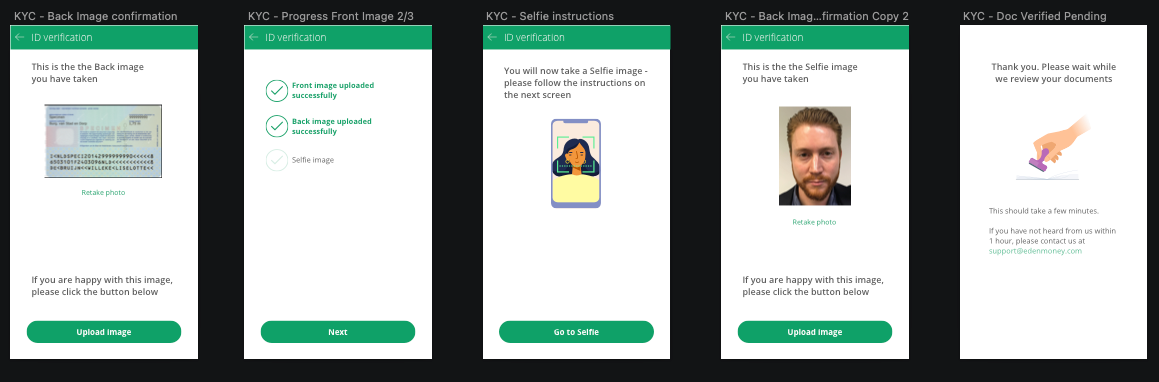
Hi-fidelity design
Screens were created using Sketch, Figma and Adobe Suite.

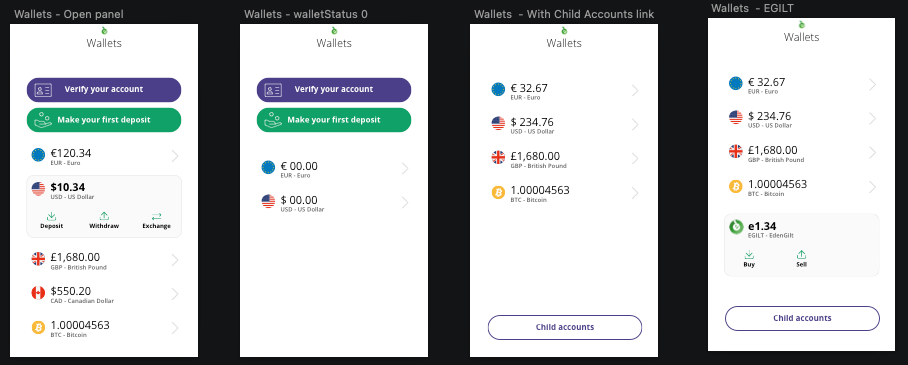
Agile Scrum
Development sprints were used to develop the product and with the lead developer, we produced product and sprint backlogs using the tracking software, Jira.
Using scrum allowed for quick testing and feedback and iteration. For example, testing during the KYC verification sprints provided valuable feedback in improving the KYC process.
There were two methods of doing KYC verification – by native mobile App – or through a mobile web version. When a user took a picture of their ID document and “Selfie”, the images were passed to a third-party service, Trulioo, for identity verification.
Users who chose to do KYC via the web version were seen to have a much higher rate of rejection by Trulioo. It was found that the native App versions of the KYC verification process allowed the user far greater control when taking the pictures, providing the user with valuable real-time feedback e.g. “move closer”, “hold steady” in a much more sophisticated manner than the mobile-web version.
Based on this, it was decided that the mobile-web version of KYC would be ditched, which also meant that users could register via web or app, but would need to eventually download the app to get fully verified and use EdenMoney fully.
Product testing
Once the product backlog was completed, web and native app versions of EdenMoney were tested by a select user group to identify and further problems.
Conclusion
At this point, the product is in “Alpha” testing phase with a select group of users.